

One play away is the cruelest phrase in sports.
It sounds so small. One play. One catch. One yard. One strike. One rebound. One kick. One whistle. One defensive stop. One fly ball that stays in the park. One handoff instead of a pass. One bounce that goes the other way.
But inside that phrase is a whole ruined universe.
A team can spend an entire season building toward a championship. Months of practices. Injuries survived. Trades justified. Veterans chasing one last ring. Young stars trying to arrive early. Fans convincing themselves this year is different. Then everything narrows to one moment, and the difference between forever glory and permanent grief becomes almost insulting.
One play away doesn’t mean a team was simply close.
It means fans can still see the exact doorway.
That’s what makes these teams so painful. The alternate ending isn’t vague. It’s right there on film. Stretch the ball one yard farther. Run the ball at the goal line. Catch the foul pop. Hold the lead for one more strike. Make the field goal. Knock down the pass. Get the final out.
Then history changes.
Instead, the moment fails, and the team becomes trapped in the worst kind of memory: close enough to touch, too far to keep.
The most painful one play away teams don’t just lose.
They leave fans staring at inches forever.
Why One Play Away Losses Hurt So Much
A one play away loss hurts because it gives grief a target.
A blowout can be miserable, but at least it’s honest. The better team won. The loser didn’t have enough. There’s no single moment to replay because the whole thing went wrong.
One play away losses are different.
They invite obsession. Fans don’t mourn the entire game equally. They return to the one snap, one pitch, one possession, one ball in the air, one coaching decision, or one missed chance. They imagine the sound if it had gone right. They imagine the parade. They imagine the ring ceremony. They imagine the documentary voiceover celebrating resilience instead of narrating heartbreak.
That’s why these losses last for decades.
They don’t feel like endings.
They feel like interrupted coronations.
And every replay becomes a little trial where history refuses to change its verdict.
The 1999 Tennessee Titans
The 1999 Tennessee Titans are the purest one play away team in Super Bowl history.
Super Bowl XXXIV against the St. Louis Rams ended with one of the most famous tackles ever. The Titans trailed by seven late, drove down the field, and reached the Rams’ 10-yard line with seconds left. Steve McNair fought through pressure and somehow kept the final drive alive. Kevin Dyson caught a pass over the middle and reached toward the goal line.
Then Mike Jones tackled him.
Dyson stretched.
The ball ended up one yard short.
That image still defines Tennessee football pain.
The Titans weren’t one drive away. They weren’t one quarter away. They were literally one yard away from a potential game-tying touchdown and extra point. Maybe they still lose in overtime. Maybe the Rams win anyway. But fans never got to see it.
Among one play away teams, Tennessee stands alone because the pain is visual and measurable. There is no abstract argument. The ball, the arm, the line, the tackle, the clock — all of it fits in one frozen frame.
One yard became an entire franchise wound.
The 2014 Seattle Seahawks
The 2014 Seattle Seahawks were one play away from becoming a full dynasty.
Seattle had won the Super Bowl the previous season with a historically dominant defense and a young quarterback in Russell Wilson. In Super Bowl XLIX against the New England Patriots, the Seahawks were at the goal line in the final seconds, trailing by four. Marshawn Lynch was in the backfield. Another championship felt close enough to taste.
Then Seattle threw the ball.
Malcolm Butler intercepted Wilson at the goal line.
The Patriots won.
That play became one of the most debated decisions in sports history. Should Seattle have run it? Was the pass call defensible? Did clock management matter? Did the formation give it away? Did Butler simply make a brilliant play?
All of that has been argued endlessly.
But emotionally, the answer for many fans remains simple: give the ball to Marshawn.
Among one play away teams, the Seahawks are especially painful because the stakes were historic. Back-to-back Super Bowls would’ve changed how that era is remembered. The Legion of Boom would’ve had a stronger dynasty claim. Wilson’s legacy would look different. Pete Carroll’s résumé would feel cleaner.
Instead, the play became a scar.
Seattle didn’t just lose a Super Bowl.
It lost an argument that never ends.
The 2011 Texas Rangers
The 2011 Texas Rangers were one strike away from winning the World Series.
Twice.
That sentence is almost cruel.
In Game 6 against the St. Louis Cardinals, Texas had a two-run lead in the ninth inning and was one strike from the first championship in franchise history. David Freese hit a game-tying triple. The Rangers took the lead again in extra innings and were again one strike away. Lance Berkman tied it.
Then Freese hit a walk-off home run in the 11th.
The Cardinals won Game 7 the next night.
Among one play away teams, the Rangers are devastating because they didn’t just touch the title once. They touched it twice in the same game. One strike away is already torture. Twice is mythology with a knife.
A franchise’s first championship changes everything. It changes old pain, fan identity, retired numbers, local memory, and how every future team is measured. Texas had it in its hands, then watched St. Louis turn survival into legend.
For Cardinals fans, Game 6 is magic.
For Rangers fans, it’s the sound of a door closing twice.
The 2003 Chicago Cubs
The 2003 Chicago Cubs were one play away from changing a century of suffering.
Maybe not literally one play from a title, since they still would’ve needed to finish the NLCS and win the World Series. But emotionally, the Steve Bartman game became the one play away wound of modern Cubs history.
Chicago led the Florida Marlins in Game 6 of the NLCS and was five outs from reaching the World Series. Then a foul ball drifted toward the left-field wall. Moisés Alou reached for it. Bartman, a Cubs fan in the front row, also reached. Alou reacted angrily. The inning unraveled. The Marlins rallied. The Cubs lost Game 6, then Game 7.
Bartman became unfairly blamed for a collapse that involved much more than one fan. The Cubs still had chances. The defense failed. The pitching failed. The team had another game. But sports grief often hunts for a face, and Bartman became the face.
Among one play away teams, the 2003 Cubs remain painful because the play became larger than baseball. It was about curses, panic, fan cruelty, and a city’s fear of hope.
The Cubs finally won in 2016.
But 2003 still feels like a haunted room.
The 1986 Boston Red Sox
The 1986 Boston Red Sox were one play away from ending the Curse of the Bambino long before 2004.
Game 6 of the World Series against the New York Mets had Boston on the edge of a championship. The Red Sox were one strike away. Then the Mets rallied. A wild pitch tied the game. Then Mookie Wilson’s ground ball went through Bill Buckner’s legs, and Ray Knight scored the winning run.
The Mets won Game 7.
Buckner became the symbol of the loss, often unfairly carrying more blame than one player should. The game had already been tied before the error. Boston still had another game. But the image was too painful and too easy to replay. Ball through legs. Runner scores. Shea Stadium erupts. Red Sox fans collapse into disbelief.
Among one play away teams, the 1986 Red Sox are legendary because the loss fit perfectly into the curse narrative. It felt scripted by whatever cruel author had been tormenting Boston baseball for decades.
The Red Sox eventually found redemption.
Buckner deserved more grace.
But the moment remains one of sports’ harshest reminders that history can turn on a ground ball.
The 1998 Minnesota Vikings
The 1998 Minnesota Vikings were one kick away from the Super Bowl.
Minnesota went 15-1 behind one of the most explosive offenses in NFL history. Randall Cunningham, Randy Moss, Cris Carter, Robert Smith, and a loaded roster made the Vikings feel destined. They were spectacular, stylish, and terrifying.
Then came the NFC Championship Game against the Atlanta Falcons.
Late in the fourth quarter, Gary Anderson lined up for a field goal. He had not missed a kick all season. If he made it, Minnesota would likely go to the Super Bowl.
He missed.
Atlanta forced overtime and won.
Among one play away teams, the Vikings hurt because the season felt magical until it didn’t. Anderson’s miss wasn’t the only reason they lost, but it became the symbol because perfection finally cracked at the worst possible moment.
For Minnesota fans, this was not just another playoff loss.
It was the loss that turned one of the greatest teams never to reach the Super Bowl into a permanent ache.
A 15-1 season should feel immortal.
Instead, it feels unfinished.
The 2016 Atlanta Falcons
The 2016 Atlanta Falcons were more than one play away.
They were several decisions away, several stops away, several snaps away, and yet somehow the whole collapse still feels like it could’ve been prevented by one sane moment.
Super Bowl LI is remembered by one number: 28-3.
Atlanta had a 25-point lead over the New England Patriots. Matt Ryan was the league MVP. Julio Jones made a ridiculous sideline catch late that should’ve helped seal the game. The Falcons were in field goal range. A run, a kick, a little clock, and the championship might have belonged to Atlanta.
Instead, sack. Penalty. Punt.
New England completed the greatest comeback in Super Bowl history and won in overtime.
Among one play away teams, the Falcons are uniquely painful because the disaster unfolded slowly enough for everyone to see the exits. There were so many moments where one play could’ve stopped the bleeding. One first down. One field goal. One defensive stop. One tackle in bounds. One decision that valued the clock over style.
Atlanta didn’t lose at the edge.
It backed away from the trophy one mistake at a time.
That may hurt even more.
The 2001 Seattle Mariners
The 2001 Seattle Mariners won 116 regular-season games.
Then they didn’t even reach the World Series.
That makes them one of baseball’s great almost teams, though their pain isn’t tied to one final play as cleanly as others. Still, the feeling remains: a historically great team came close enough to imagine immortality, then ran into the New York Yankees in the ALCS and vanished before the final stage.
The Mariners had Ichiro Suzuki, Edgar Martinez, Bret Boone, Mike Cameron, strong pitching, and a magical regular season after losing major stars in previous years. They turned what could’ve been a transitional year into one of the greatest regular seasons ever.
But October didn’t care.
Among one play away teams and almost champions, Seattle matters because the gap between regular-season greatness and postseason emptiness feels so unfair. One different series, one different matchup, one hot week at the right time, and the Mariners might be remembered as one of baseball’s greatest teams.
Instead, 116 wins became both achievement and accusation.
How do you win that much and not finish?
Seattle still knows.
The 2015-16 Golden State Warriors
The 2015-16 Golden State Warriors were one win away from completing the greatest season in NBA history.
Golden State went 73-9, breaking the 1995-96 Bulls’ regular-season wins record. Stephen Curry was unanimous MVP. The Warriors played beautiful, terrifying basketball built on spacing, shooting, movement, and confidence. They were defending champions and looked like the league’s future arriving early.
Then the NBA Finals turned.
Golden State led Cleveland 3-1. Draymond Green was suspended for Game 5. Andrew Bogut got hurt. LeBron James and Kyrie Irving became brilliant. The Warriors still had Game 7 at home.
Late in the game, Andre Iguodala went up for a layup.
LeBron blocked it.
Kyrie hit the shot.
Golden State lost.
Among one play away teams, the Warriors are fascinating because they were one win, one basket, one stop, or one slightly different sequence from owning the strongest single-season résumé in NBA history. Instead, 73-9 became a setup for Cleveland’s redemption.
The Warriors won more titles later.
But 2016 remains the one that got away loudest.
The 1997 Cleveland Indians
The 1997 Cleveland Indians were two outs away from winning the World Series.
Cleveland led Game 7 against the Florida Marlins in the ninth inning. José Mesa was on the mound. The franchise had not won a World Series since 1948. The title was right there.
Then the Marlins tied the game.
In the 11th inning, Edgar Rentería hit the walk-off single, and Florida won the championship.
Among one play away teams, Cleveland belongs because of how close the city came to ending a baseball drought. The Indians of that era were loaded with talent and had already come close in 1995. By 1997, it felt like the window might finally produce the ring.
Instead, Cleveland suffered another near miss.
This loss became part of the city’s broader sports heartbreak, alongside The Drive, The Fumble, and decades of frustration before the Cavaliers’ 2016 title.
Some cities collect championships.
Cleveland collected almosts.
The 1997 World Series was one of the sharpest.
The 1986 Cleveland Browns
The 1986 Cleveland Browns were one defensive stop away from the Super Bowl.
In the AFC Championship Game, Cleveland led the Denver Broncos late. John Elway and the Broncos were backed up at their own 2-yard line with time running down. The Browns were close enough to feel it. The Super Bowl was waiting.
Then came The Drive.
Elway led Denver 98 yards to tie the game, and the Broncos won in overtime.
Among one play away teams, the Browns are essential because this moment became civic shorthand. It wasn’t just a loss. It got a name. That’s how you know a sports wound has entered folklore. The Drive became part of Cleveland’s suffering vocabulary, soon joined by The Fumble the next year.
The Browns had a team good enough to reach the Super Bowl.
They had the lead.
They had the field position.
They needed one stop.
Instead, Elway built a legend on their heartbreak.
That’s the cruel exchange sports sometimes makes.
One team gets mythology.
The other gets a capitalized wound.
The 1987 Cleveland Browns
The 1987 Cleveland Browns somehow found a different way to be one play away.
A year after The Drive, Cleveland met Denver again in the AFC Championship Game. This time, the Browns trailed late but drove toward a potential tying touchdown. Earnest Byner took the ball near the goal line and looked ready to score.
Then he fumbled.
The Broncos recovered.
The play became known as The Fumble.
Among one play away teams, the Browns’ back-to-back heartbreak is almost unfair. One year, they needed one stop. The next, they needed one ball secured at the goal line. Both times, Denver survived. Both times, Cleveland was left with a named disaster.
Byner’s career should not be reduced to that play, and he later won a Super Bowl with Washington. But sports memory can be ruthless. The Fumble became part of Cleveland’s heartbreak museum.
Some fanbases suffer losses.
Browns fans got a vocabulary list.
The Drive.
The Fumble.
Pain with titles.
The 2009 Minnesota Vikings
The 2009 Minnesota Vikings were one clean Brett Favre decision away from the Super Bowl.
Minnesota had a loaded team with Adrian Peterson, a strong defense, and Favre playing brilliant late-career football. In the NFC Championship Game against the New Orleans Saints, the Vikings had chances despite turnovers and punishment.
Late in regulation, Minnesota approached field goal range. Favre rolled right and had room to run. Instead, he threw across his body.
Interception.
The Saints won in overtime and went on to win the Super Bowl.
Among one play away teams, the Vikings are here again because the franchise seems cursed to specialize in this exact emotional genre. The Favre interception became instantly painful because everyone saw the safer choice. Run. Slide. Kick. Maybe win.
Instead, Favre did the most Favre thing possible: trusted his arm in a moment where restraint might’ve been the better miracle.
The Vikings didn’t just lose.
They lost in a way that matched the quarterback’s whole mythology.
Brilliant.
Reckless.
Unforgettable.
Devastating.
The 2018 New Orleans Saints
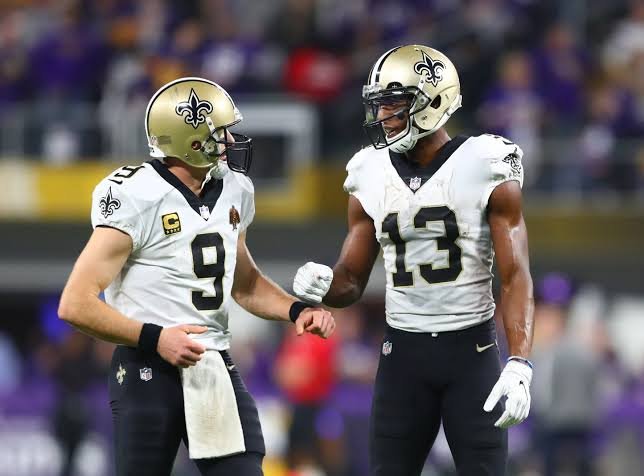
The 2018 New Orleans Saints were one flag away from the Super Bowl.
Late in the NFC Championship Game against the Los Angeles Rams, Drew Brees and the Saints were driving. A pass to Tommylee Lewis near the sideline ended with early contact from Nickell Robey-Coleman. It looked like obvious pass interference.
No flag.
The Saints settled for a field goal. The Rams tied it, then won in overtime.
Among one play away teams, the Saints are different because the defining play was not something they failed to execute. It was something officials failed to call. That makes the bitterness deeper. A missed kick or interception creates blame inside the team. A missed call creates a feeling that history was taken from outside.
New Orleans fans still believe they should’ve had a first down, the clock, and a short field goal attempt to reach the Super Bowl.
It’s hard to blame them.
Some losses feel heartbreaking.
This one felt administratively cursed.
The 2019 Houston Astros
The 2019 Houston Astros were one home win away from another World Series title.
Houston had an incredible roster and led the Washington Nationals in Game 7. Zack Greinke was dealing. The Astros looked positioned to finish the job at home. Then Anthony Rendon homered, Howie Kendrick hit the famous opposite-field homer off the foul pole, and Washington completed its road-only World Series miracle.
The Nationals won every game of the series in Houston.
That alone feels impossible.
Among one play away teams, the Astros’ 2019 loss is complicated by the sign-stealing scandal surrounding the franchise’s earlier title. Many neutral fans had little sympathy. But from a pure baseball standpoint, Houston was extremely close to another championship.
One pitching decision, one pitch, one ball off the pole, one late inning going differently, and the Astros’ dynasty argument looks stronger.
Instead, Washington got the fairy tale.
Houston got the clang of the foul pole.
Sometimes one sound changes October.
The 2022 Philadelphia Phillies
The 2022 Philadelphia Phillies were closer to a World Series turn than the final result may suggest.
Against the Houston Astros, the Phillies split the first two games and carried the hope of a wild, lower-seeded run. In Game 5, trailing late, J.T. Realmuto sent a deep drive to right-center field. Chas McCormick made a leaping catch at the wall to preserve Houston’s lead.
The Astros won the game, then closed the series in Game 6.
Were the Phillies literally one play away from a title? No. But that catch felt like one of the series’ hinge moments. If the ball gets over the wall, if Philadelphia ties or takes control, if the series goes back in a different direction, the whole emotional temperature changes.
Among one play away teams, the Phillies represent the softer version of the category: the team that wasn’t at the finish line yet, but had a single moment where fans could see the road reopening.
Then a glove closed it.
The 2010 Butler Bulldogs
The 2010 Butler Bulldogs were one shot away from the greatest ending in college basketball history.
Butler, a mid-major program from Indianapolis, reached the national championship game against Duke. The game was played in Indianapolis, giving the whole story a movie-script quality. Butler had toughness, discipline, defense, and the kind of underdog magic March Madness was built to celebrate.
Then Gordon Hayward launched a half-court shot at the buzzer.
It hit the backboard.
It hit the rim.
It missed.
Duke won.
Among one play away teams, Butler is one of the most romantic examples because the shot would’ve created maybe the most famous buzzer-beater in college basketball history. A mid-major beating Duke for the national title in its hometown on a half-court heave? That’s not a highlight. That’s a sports movie ending that would’ve been criticized as too obvious.
Instead, the ball bounced out.
The miss became almost as famous as a make would’ve been.
That’s the pain of being one play away.
Even the almost is beautiful.
Why These Teams Never Fully Disappear
The most painful one play away teams never fully disappear because fans keep them alive through retelling.
Every sport has champions. Not every champion is remembered with emotional detail. But almost champions often are. The 1999 Titans. The 2011 Rangers. The 2014 Seahawks. The 1998 Vikings. The 2003 Cubs. The 2010 Butler Bulldogs. Fans remember them because the ending stayed unresolved inside the imagination.
That’s the strange gift of heartbreak.
It preserves the team.
Winning completes the story. Losing by inches leaves the story open, and open stories invite return. Fans go back because they’re still trying to close the loop.
They can’t.
But they try.
The Legacy of One Play Away Teams
The legacy of one play away teams is that they show how thin the line is between immortality and ache.
The 1999 Titans were one yard from forcing a possible Super Bowl overtime. The 2014 Seahawks were one goal-line decision from back-to-back titles. The 2011 Rangers were one strike away twice. The 2003 Cubs were five outs away when a foul ball helped unlock a nightmare. The 1986 Red Sox watched a ground ball become curse language. The 1998 Vikings missed the kick no one expected to miss. The 2016 Falcons had a title in their hands and let it evaporate. The 2001 Mariners turned 116 wins into unfinished business. The 2016 Warriors lost the greatest season argument in Game 7. The 1997 Indians were two outs away. The 1986 and 1987 Browns turned heartbreak into named disasters. The 2009 Vikings watched Brett Favre choose risk over restraint. The 2018 Saints were one missed flag from a likely Super Bowl trip. The 2019 Astros heard a foul pole change the World Series. The 2022 Phillies saw a comeback disappear into Chas McCormick’s glove. The 2010 Butler Bulldogs watched a half-court miracle hit the rim and fall away.
One play away teams matter because they make sports history feel fragile.
A dynasty can be born on one snap.
A curse can live on one ground ball.
A city can heal on one kick.
A championship can die on one yard.
That’s why fans never stop replaying these moments.
They’re not trying to torture themselves.
They’re trying to find the version where the ball crosses the line, the flag flies, the kick is good, the shot drops, the catch falls incomplete, and the team that almost had everything finally gets to keep it.