

Two-sport athletes make fans feel like normal athletic categories are too small.
Most athletes spend their whole lives trying to master one sport. One swing. One jump shot. One route tree. One pitching motion. One defensive system. One season’s rhythm. One professional body built for one professional demand.
Then a few rare people show up and make that look narrow.
They don’t just play another sport casually. They excel. They get drafted. They start. They win. They make highlights in different uniforms, on different fields, against different kinds of pressure. They turn the question from “How good are they?” into “How is this even possible?”
That’s why two-sport athletes feel mythic.
They remind fans that athletic greatness isn’t always specialized. Sometimes it’s broader, stranger, and more natural than the systems built to contain it. Speed can become a stolen base or a kickoff return. Power can become a home run or a tackle. Vision can become a touchdown pass or a fast break. Competitive arrogance can travel anywhere.
The modern sports world usually pushes athletes toward early specialization. Pick one sport. Train year-round. Build the body for the position. Protect the investment. Avoid risk. Stay in the lane.
Two-sport athletes are the glorious argument against that.
They make sports feel wide open again.
Why Two-Sport Athletes Fascinate Fans
Two-sport athletes fascinate fans because they suggest a different level of talent.
A great baseball player is impressive. A great football player is impressive. But someone who can play both at a high level seems almost unfair. It challenges the idea that elite sports are separate worlds. It makes fans wonder what else the athlete could’ve done with more time, better timing, fewer injuries, or a different choice.
There’s also a fantasy element. Fans love imagining the crossover. What if that quarterback had stuck with basketball? What if that baseball player had chosen football? What if that track star had played wide receiver? What if the best athlete in the room was never fully contained by one sport?
Two-sport athletes also create nostalgia because their stories feel harder to imagine now. Professional sports have become more specialized, more expensive, and more risk-averse. Teams invest too much money to love the idea of a superstar playing somewhere else in the offseason.
That makes the great two-sport athletes feel like relics from a wilder world.
A better world, maybe.
At least a more fun one.
Bo Jackson
Bo Jackson is the ultimate two-sport athlete myth.
He played Major League Baseball and NFL football, and somehow both careers felt like they were revealing only part of the story. With the Kansas City Royals, Bo had power, speed, and a throwing arm that made base runners reconsider their life choices. With the Los Angeles Raiders, he ran with a combination of violence and grace that still looks fake on old highlights.
Bo didn’t just play two sports.
He looked designed by someone trying to win a bar argument.
The “Bo Knows” campaign worked because people already believed the premise. Bo seemed capable of doing almost anything. Baseball? Yes. Football? Yes. Track? Probably. Archery? Why not. He had that rare athletic aura where fans didn’t need the details before accepting the legend.
Among two-sport athletes, Bo stands alone because his greatness remains tied to possibility. A hip injury ended his football career and changed everything, which made the mythology stronger and sadder. Fans never got the full answer. They got enough evidence to believe the ceiling was enormous.
That’s why Bo still feels unreal.
He wasn’t just great.
He was unfinished greatness, which might be the most powerful kind.
Deion Sanders
Deion Sanders didn’t just play football and baseball.
He turned playing both into a lifestyle brand.
Prime Time was one of the greatest cornerbacks in NFL history, a shutdown defender with elite speed, outrageous confidence, and the rare ability to make avoiding his side of the field feel like common sense. He was also a Major League Baseball player who brought speed, flair, and real value to the diamond.
Deion even played in both an NFL game and an MLB game on the same day, which still sounds like something invented for a sports movie.
Among two-sport athletes, Deion’s case is different from Bo’s. Bo’s legend is built around raw physical impossibility. Deion’s is built around performance, durability, style, and actual longevity at elite levels. He won Super Bowls, played in a World Series, returned kicks, stole bases, talked nonstop, and made everything look like part of the same show.
That’s the thing about Deion.
The two-sport life didn’t seem to exhaust the persona.
It fed it.
Some athletes split themselves between sports.
Deion made both sports orbit him.
Jim Thorpe
Jim Thorpe may be the greatest all-around athlete in American history.
His résumé sounds less like a career and more like a dare. He won Olympic gold medals in the decathlon and pentathlon, played professional football, played professional baseball, and became a foundational figure in early American sports. He also competed in other sports with the kind of natural ability that made people talk about him like folklore.
Thorpe’s era was different, of course. Sports weren’t as specialized or professionalized as they are now. But that shouldn’t shrink his greatness. If anything, it shows how broad his ability was before modern training systems turned athletes into narrower machines.
Among two-sport athletes, Thorpe belongs near the top because he wasn’t simply crossing between two sports. He seemed to belong to the whole idea of athletic competition. Strength, speed, balance, coordination, toughness — he had the complete toolkit.
Thorpe’s legacy also carries injustice, especially around the stripping and later restoration of his Olympic honors. That history adds another layer to his story: greatness recognized, punished, debated, and finally honored more properly with time.
Some athletes dominate a sport.
Thorpe dominated the concept of being an athlete.
Babe Didrikson Zaharias
Babe Didrikson Zaharias was one of the most extraordinary athletes ever, regardless of gender, era, or category.
She excelled in track and field, winning Olympic medals, then became a dominant golfer and one of the central figures in women’s sports history. She also played basketball and competed seriously in other sports, making her less a two-sport athlete than a multi-sport force.
But her track-and-golf greatness alone earns her a place among the greatest two-sport athletes.
Zaharias had power, confidence, competitiveness, and a refusal to fit the narrow expectations placed on women athletes in her time. She didn’t simply succeed. She challenged the cultural idea of what women in sports were allowed to look like, sound like, and become.
Among two-sport athletes, Zaharias matters because her greatness carried social weight. She wasn’t just crossing sports. She was crossing boundaries built by sexism, expectation, and limited opportunity.
Her golf career alone would be historic.
Her Olympic career alone would be historic.
Together, they make her one of the most complete competitors sports has ever seen.
Charlie Ward
Charlie Ward is one of the most fascinating two-sport athletes because he chose basketball after winning college football’s most famous individual award.
At Florida State, Ward won the Heisman Trophy as a quarterback and led one of college football’s powerhouse programs. He had the poise, intelligence, and athleticism to be a major football star. But he also played basketball and ultimately chose the NBA, where he had a long career as a point guard.
That choice still feels wild.
Most Heisman winners spend their whole lives chasing the NFL. Ward won the award and then went in another direction.
Among two-sport athletes, Ward stands out because he wasn’t just good at two sports in high school or as a vague prospect. He was elite enough in football to win the Heisman and good enough in basketball to last years in the NBA. That’s absurd range.
Ward’s story also shows how athletic intelligence can travel. Quarterback and point guard are different jobs, but both require vision, timing, leadership, spatial awareness, and calm under pressure.
Ward had those qualities.
He just changed the shape of the ball.
Brian Jordan
Brian Jordan had one of the strongest professional two-sport careers of the modern era.
He played safety in the NFL for the Atlanta Falcons, then became a Major League Baseball All-Star outfielder. That alone is remarkable. Football safety and baseball outfield require very different rhythms, bodies, and skill sets. One sport is violent and explosive. The other is daily, technical, and built around failure.
Jordan handled both.
Among two-sport athletes, he sometimes gets overlooked because he wasn’t as culturally mythic as Bo or Deion. But his actual résumé deserves serious respect. Playing in the NFL is rare. Becoming an MLB All-Star is rare. Doing both is almost ridiculous.
Jordan’s career is a reminder that fame and greatness aren’t always the same conversation. He may not have had the marketing aura of Bo or the celebrity voltage of Deion, but he proved his athletic range in two of America’s hardest leagues.
That’s not trivia.
That’s elite.
Danny Ainge
Danny Ainge played Major League Baseball before becoming an NBA champion and executive.
He reached the majors with the Toronto Blue Jays, then chose basketball and became a key guard for the Boston Celtics. Ainge was tough, smart, irritating, competitive, and valuable on championship teams. Later, he became an influential NBA executive, extending his basketball life long after his playing days.
Among two-sport athletes, Ainge is interesting because his baseball career wasn’t just theoretical. He actually played in MLB. Then he shifted to the NBA and built the legacy most fans remember.
That transition shows how difficult sports identity can be. Fans may know Ainge as a basketball figure, but his early baseball career proves he had rare athletic adaptability.
It’s hard enough to be good enough for one major league.
Ainge touched two.
Then he kept shaping one from the front office.
That’s a full sports life.
Kyler Murray
Kyler Murray is one of the most modern examples of the two-sport athlete dilemma.
He was an elite football quarterback and a first-round Major League Baseball draft pick. The Oakland Athletics wanted him. The NFL wanted him. Eventually, Murray chose football, became the No. 1 pick in the NFL Draft, and entered the league as one of its most dynamic quarterback talents.
Murray’s story matters because it shows how rare the true two-sport decision still is.
Modern teams don’t like sharing. Contracts are enormous. Injury risk is terrifying. Development timelines are demanding. A player like Murray forces everyone to ask which future is worth more and which sport can afford to wait.
Among two-sport athletes, Murray belongs because baseball wasn’t just a backup hobby. He had real professional value in both sports. The fact that he chose one doesn’t erase the rarity of being coveted by both.
In another era, maybe he tries both.
In this era, the business side usually wins.
Russell Wilson
Russell Wilson is known as a Super Bowl-winning NFL quarterback, but baseball has always been part of his athletic story.
Wilson played college baseball and spent time in professional baseball systems before fully becoming an NFL star. His baseball rights and spring training appearances became part of his larger image as a polished, multi-talented athlete.
He wasn’t a Bo or Deion-style two-league star, but he belongs in the broader conversation because his ability was real enough to keep baseball attached to his name.
Among two-sport athletes, Wilson represents a more common modern version: the athlete who could travel between sports early, but eventually had to specialize because football stardom became too valuable to risk.
Quarterback and baseball middle infield share more than fans might think. Footwork, hands, anticipation, throwing accuracy, leadership, and calm all matter. Wilson’s athletic background helped shape the player he became.
Not every two-sport story ends with two pro careers.
Sometimes the second sport is part of the foundation.
Dave Winfield
Dave Winfield was drafted by teams in multiple professional leagues, which tells you everything about his athletic reputation.
He became a Hall of Fame baseball player, but his talent extended across baseball and basketball. Winfield played both sports at the University of Minnesota and had the size, coordination, and competitive profile that made professional teams across sports interested.
Among two-sport athletes, Winfield is fascinating because his baseball career became so successful that the multi-sport part can get overshadowed. That’s often how it works. Once an athlete becomes a Hall of Famer in one sport, the other paths start to feel like footnotes.
But they weren’t footnotes at the time.
Winfield had choices because he had gifts. His long baseball career proved one choice was absolutely correct, but the fact that other leagues saw a future in him shows how rare his athletic profile was.
Some athletes are prospects.
Winfield was an industry-wide temptation.
Dave DeBusschere
Dave DeBusschere played both Major League Baseball and NBA basketball, then became one of basketball’s great champions.
He pitched for the Chicago White Sox while also building an NBA career. Eventually, basketball became his primary legacy, especially with the New York Knicks, where he helped anchor championship teams with toughness, defense, rebounding, and intelligence.
Among two-sport athletes, DeBusschere belongs because his baseball and basketball careers overlapped in a way that feels almost impossible now. The idea of an NBA star also pitching in the major leagues sounds like a scheduling nightmare, a front office panic attack, and a documentary waiting to happen.
But DeBusschere did it.
His story also captures a different sports era, when athletes could still move between leagues with less corporate restriction and more personal daring.
That doesn’t make it easier.
It just makes it feel wonderfully extinct.
Gene Conley
Gene Conley is one of the rare athletes to win championships in two major professional sports.
He played Major League Baseball as a pitcher and also played in the NBA, winning titles with the Boston Celtics. That combination makes him one of the most accomplished two-sport athletes in history, even if modern fans don’t mention him as often as they should.
Conley’s career is a reminder that fame fades faster than achievement.
Winning in two major sports should be almost impossible. It requires talent, timing, health, opportunity, and the willingness to live inside completely different competitive rhythms. Baseball asks for patience and repetition. Basketball asks for pace, movement, and constant physical engagement.
Conley navigated both.
Among two-sport athletes, his championship distinction gives him a special place. Others were more famous. Others were more explosive. Others became larger cultural figures.
But winning titles in two sports?
That’s rare air.
Jackie Robinson
Before Jackie Robinson changed Major League Baseball forever, he was a brilliant multi-sport athlete at UCLA.
Robinson excelled in football, basketball, baseball, and track, showing the kind of all-around athleticism that would’ve made him extraordinary in almost any era. His professional legacy is rightly centered on breaking baseball’s color barrier, but his broader athletic background deserves recognition too.
Among two-sport athletes, Robinson’s story matters because it shows that his greatness wasn’t confined to baseball. He was fast, strong, smart, coordinated, competitive, and adaptable. The qualities that helped him survive and excel under unimaginable pressure in MLB were part of a larger athletic foundation.
Robinson’s importance goes beyond any list.
Still, in the specific world of two-sport athletes, he belongs because his range was real. Baseball became the stage where history changed, but it wasn’t the only sport that revealed his gifts.
Some athletes choose one sport because it’s the only one available.
Robinson chose baseball as the door history forced him to open.
Michael Jordan
Michael Jordan’s baseball career is often treated like a strange detour, but it belongs in the two-sport athlete conversation.
After winning three straight NBA championships, Jordan left basketball and played minor league baseball in the Chicago White Sox organization. He was not a Major League Baseball star. He wasn’t Bo or Deion. But the attempt itself remains one of the most fascinating athletic experiments ever.
Why?
Because Jordan was already the best basketball player in the world.
He had nothing to prove and everything to risk publicly. Baseball is a humiliating sport even for people who’ve played it their whole lives. Jordan stepped into it after years away from competitive baseball and took the failure in public.
Among two-sport athletes, Jordan’s case isn’t about equal success. It’s about the audacity of trying. His baseball career also adds texture to his mythology: grief, escape, challenge, stubbornness, and the refusal to live inside other people’s expectations.
He didn’t conquer baseball.
But even not conquering it became part of the legend.
That’s very Jordan.
Wilt Chamberlain
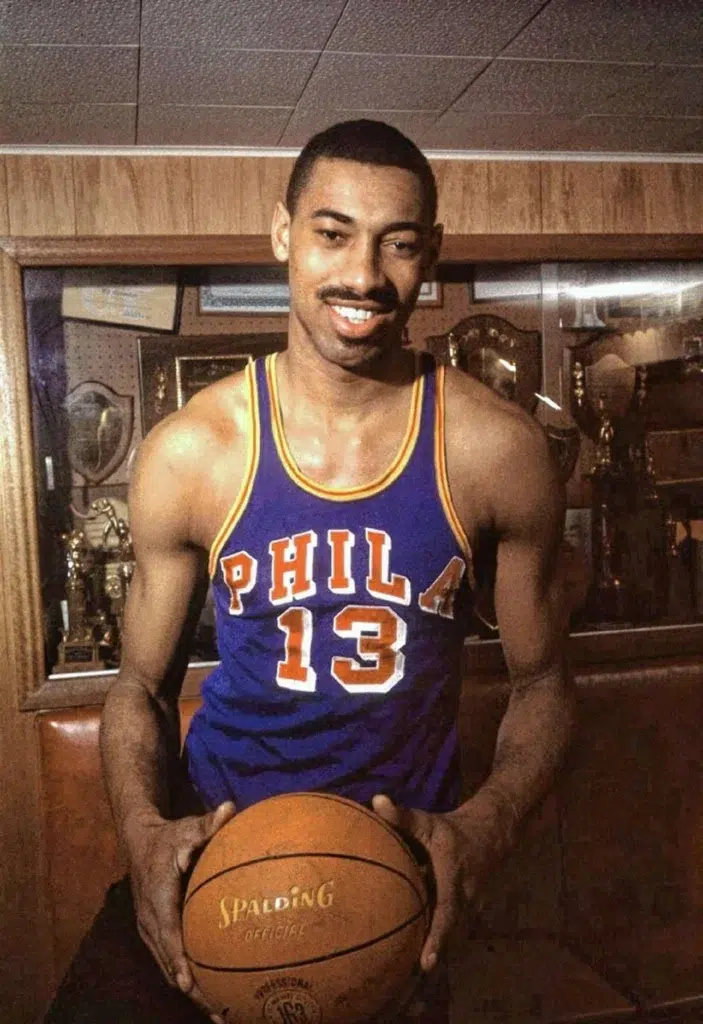
Wilt Chamberlain is remembered as one of basketball’s most statistically dominant players, but his athletic range extended beyond the NBA.
He was an outstanding track and field athlete and later became associated with volleyball, where his size, jumping ability, and coordination translated naturally. Wilt’s physical gifts were so extreme that fans still debate what he might’ve done in other sports with full specialization.
Among two-sport athletes, Wilt belongs more as a multi-sport athletic phenomenon than as a two-major-league professional like Bo or Deion. But his inclusion makes sense because some bodies are so unusual that one sport feels like a limited sample size.
Wilt was one of those bodies.
Seven feet tall, powerful, agile, durable, and explosive. Basketball gave him the perfect stage, but it didn’t exhaust the possibilities.
Some athletes are great because they master a sport.
Wilt looked like a sport could be built around him.
Jim Brown
Jim Brown is best remembered as one of the greatest running backs in NFL history, but he was also a legendary lacrosse player.
At Syracuse, Brown excelled in football and lacrosse, and many who know the sport consider him one of the greatest lacrosse players ever. That combination matters because lacrosse demands speed, strength, hand-eye coordination, toughness, field vision, and physical courage — traits that also made Brown devastating on the football field.
Among two-sport athletes, Brown’s lacrosse greatness gives his legacy even more depth. Football made him a national icon, but lacrosse showed the breadth of his athletic ability.
Brown’s power was obvious.
His grace sometimes gets less attention.
Lacrosse helps explain both.
He wasn’t just a football force. He was a complete field athlete, the kind of competitor whose body and instincts translated across games built on space, contact, and control.
Why Two-Sport Greatness Is So Rare Now
Two-sport athletes are rarer now because modern sports don’t like sharing bodies.
The money is too big. The seasons are too long. The training is too specialized. The injury risk is too frightening. A franchise paying a quarterback, pitcher, striker, or point guard millions of dollars doesn’t want that athlete getting hurt somewhere else.
Youth sports also changed. Many kids are pushed toward specialization earlier, sometimes too early. Travel teams, private coaching, recruiting calendars, year-round schedules, and scholarship pressure all encourage athletes to narrow their focus.
That may produce technical skill.
It may also reduce the number of broad athletic monsters who once grew up playing everything.
The great two-sport athletes remind fans that variety can create genius too. Playing multiple sports can build different muscles, instincts, angles, and competitive habits.
A basketball player learns spacing.
A quarterback learns vision.
A baseball player learns patience.
A track athlete learns speed.
A lacrosse player learns movement through contact.
Sometimes those lessons travel beautifully.
The Legacy of Two-Sport Athletes
The legacy of two-sport athletes is that they make sports feel bigger than specialization.
Bo Jackson looked like myth in shoulder pads and spikes. Deion Sanders made football and baseball part of the same Prime Time show. Jim Thorpe turned athletic range into American folklore. Babe Didrikson Zaharias dominated across track, golf, and more while challenging limits placed on women athletes. Charlie Ward won the Heisman, then played point guard in the NBA. Brian Jordan played NFL safety and became an MLB All-Star. Danny Ainge reached MLB before winning NBA championships. Kyler Murray forced two leagues to dream about him. Dave Winfield drew professional interest across sports before choosing a Hall of Fame baseball path. Dave DeBusschere pitched in MLB and won NBA titles. Gene Conley won championships in two major sports. Jackie Robinson’s multi-sport brilliance preceded his historic baseball career. Michael Jordan’s baseball detour became its own cultural chapter. Jim Brown’s lacrosse greatness adds depth to his football legend.
Two-sport athletes matter because they resist the idea that greatness has to be narrow.
They prove that some talent travels.
Across seasons.
Across surfaces.
Across uniforms.
Across entire sports.
Most athletes spend their lives trying to master one game.
The rarest ones make fans wonder why they had to choose at all.