

Sports meltdowns are what happen when pressure stops being invisible.
Most athletes and coaches spend their careers trying to look controlled. They answer questions carefully. They praise teammates. They respect opponents. They say they’re focused on the next game. They swallow bad calls, bad luck, bad questions, bad losses, and bad decisions because professionalism demands the mask stay on.
Then something cracks.
A racket gets smashed. A chair gets thrown. A referee gets screamed at. A player loses control. A coach storms the court. A team collapses under pressure. A postgame interview turns into a rant. A superstar says the thing everyone will replay forever.
That’s why sports meltdowns are so memorable.
They’re not always admirable. Some are funny. Some are embarrassing. Some are ugly. Some are understandable. Some are impossible to defend. But they reveal something fans recognize immediately: the moment got too big, too unfair, too humiliating, too personal, or too chaotic for the person inside it to keep pretending.
Sports are built on control.
Meltdowns show the cost of losing it.
Why Sports Meltdowns Fascinate Fans
Sports meltdowns fascinate fans because they feel honest, even when they’re wrong.
A calm athlete may be giving the correct answer. A furious athlete may be revealing the real emotion. That doesn’t make the behavior okay, but it does make it compelling. Fans are drawn to the moment the polished version disappears and the raw version takes over.
Meltdowns also expose the pressure system around sports. It’s easy to watch from the couch and say someone should’ve stayed calm. It’s harder to imagine performing in front of millions while a bad call, missed shot, brutal loss, or personal insult feels like it’s swallowing your entire career.
That pressure doesn’t excuse everything.
But it explains why control can fail.
The best sports meltdowns become part of history because they turn private frustration into public theater.
John McEnroe: “You Cannot Be Serious!”
John McEnroe built much of his tennis mythology around talent, anger, and argument.
His most famous meltdown came at Wimbledon in 1981, when he exploded at an umpire over a call and delivered the line that became attached to him forever: “You cannot be serious!”
It was theatrical, furious, and instantly memorable.
McEnroe’s genius made the meltdowns more complicated. He wasn’t just a loud player trying to distract from weakness. He was brilliant, precise, creative, and one of the most gifted tennis players ever. His anger felt like part of the same nervous system that made him great. He saw the ball, the line, and the moment with such intensity that every perceived mistake became intolerable.
Among sports meltdowns, McEnroe’s stands out because it became almost charming in hindsight, even though officials probably didn’t feel that way at the time. Fans turned the line into comedy, imitation, and brand identity.
That’s the strange reward of a famous meltdown.
Lose control memorably enough, and culture may hand it back to you as a catchphrase.
Bobby Knight Throws the Chair
Bobby Knight’s chair throw remains one of the most infamous coach meltdowns in sports history.
During a 1985 Indiana basketball game against Purdue, Knight became furious with officiating and threw a chair across the court. The image became permanent: a legendary coach, volcanic temper, public rage, and a chair sliding into sports history.
Knight’s brilliance as a coach was real. So was the darkness around his behavior. That’s why his meltdowns are harder to romanticize now. For years, sports culture often treated rage as proof of passion. Knight’s career forces a more uncomfortable question: when does intensity become abuse, and why do winning programs tolerate behavior they’d condemn from almost anyone else?
Among sports meltdowns, the chair throw matters because it became the symbol of Knight’s entire public persona. Disciplined basketball, demanding standards, genius coaching, and total combustion all lived inside the same man.
The chair didn’t come from nowhere.
It came from a culture that too often confused fear with leadership.
Mike Tyson Bites Evander Holyfield
Mike Tyson biting Evander Holyfield in 1997 is one of the ugliest and most unforgettable sports meltdowns ever.
The rematch between Tyson and Holyfield already carried enormous tension. Holyfield had beaten Tyson in their first fight, and Tyson entered the second bout frustrated by Holyfield’s tactics and head clashes. Then Tyson lost control in a way nobody could spin into ordinary boxing behavior.
He bit Holyfield’s ear.
Then, after the fight resumed, he bit him again.
Tyson was disqualified, and the scene became one of the most infamous moments in sports history.
Among sports meltdowns, this one stands apart because it crossed from anger into something shocking and grotesque. Boxing is already violent, but it has rules. Tyson broke the sport’s basic agreement in front of the world.
The moment became a symbol of Tyson’s unraveling: talent, rage, fame, trauma, punishment, and chaos all crashing together.
Some meltdowns are funny later.
This one still feels disturbing.
Serena Williams at the U.S. Open
Serena Williams has had several high-profile clashes with officials, but her 2009 U.S. Open semifinal against Kim Clijsters remains one of the most discussed.
Late in the match, Serena was called for a foot fault. Already under pressure, she reacted angrily toward the line judge, and the confrontation led to a point penalty on match point. Clijsters won the match.
The moment became instantly controversial, with debates over Serena’s behavior, officiating, race, gender, intensity, and how female athletes are judged when they show anger.
That’s what makes this one of the most complicated sports meltdowns. Serena was wrong to threaten or berate an official. But the public reaction also revealed how differently anger can be interpreted depending on who expresses it. Male athletes have often been allowed to build entire brands around fury. Serena’s anger was treated by many as something larger and more threatening.
The meltdown mattered because it wasn’t only about one call.
It opened a broader argument about power, perception, and who gets to be emotional in public.
Zinedine Zidane’s Headbutt
Zinedine Zidane’s headbutt in the 2006 World Cup Final is one of the most stunning sports meltdowns because of who did it and when.
Zidane was one of the greatest soccer players ever, playing the final match of his career on the biggest stage in the sport. France and Italy were locked in extra time. Then, after an exchange with Marco Materazzi, Zidane turned and headbutted him in the chest.
Red card.
Career over.
Italy went on to win the World Cup on penalties.
Among sports meltdowns, Zidane’s headbutt is almost mythic because it felt like tragedy, not comedy. A genius, a final stage, an insult, a sudden act of violence, and an ending nobody would’ve written because it seemed too cruel.
Zidane had already scored in the match. He could’ve ended his career lifting the World Cup.
Instead, his last image as a player was walking past the trophy after being sent off.
That’s the kind of meltdown sports never forget because it changed the final frame of a legend.
Dennis Rodman Kicks the Cameraman
Dennis Rodman was chaos wearing basketball shoes.
In 1997, during a game in Minnesota, Rodman fell into a group of photographers near the court. Frustrated, he kicked a cameraman, an act that led to suspension, fines, and public criticism.
Rodman’s entire career lived close to the line between entertainment and disruption. His rebounding genius was undeniable. His defensive value was real. His personality made him famous far beyond his role. But moments like this showed how quickly spectacle could become harmful.
Among sports meltdowns, Rodman’s kick stands out because it wasn’t just an argument with a referee or a broken piece of equipment. It involved someone simply doing a job near the court. That made it harder to laugh off as colorful behavior.
Rodman’s volatility helped make him fascinating.
It also made him dangerous to himself and others when the emotion went sideways.
That’s the line sports culture loves to blur until someone gets hurt.
George Brett and the Pine Tar Game
George Brett’s Pine Tar Game meltdown is one of baseball’s funniest and most iconic explosions.
In 1983, Brett hit a go-ahead home run for the Kansas City Royals against the New York Yankees. Yankees manager Billy Martin challenged the amount of pine tar on Brett’s bat. The umpires ruled Brett out, wiping away the home run.
Brett came charging out of the dugout like a man trying to outrun his own blood pressure.
The image is perfect: arms flailing, face red, rage fully visible, teammates and umpires trying to contain him. The ruling was later overturned, and the home run counted, which only makes the meltdown better in hindsight.
Among sports meltdowns, Brett’s is beloved because it was so physical and so instantly understandable. Baseball players usually have time to be mad in slow motion. Brett compressed all of it into one furious sprint.
The man had just lost a home run on a technicality.
His body reacted before diplomacy could file the paperwork.
Earl Weaver vs. Umpires
Earl Weaver made arguing with umpires feel like part of baseball’s natural ecosystem.
The longtime Baltimore Orioles manager was brilliant, fiery, profane, and endlessly willing to challenge officials. His meltdowns became part of his legend because they mixed baseball intelligence with pure irritation. Weaver didn’t just argue. He performed outrage with the timing of a man who had rehearsed nothing and felt everything.
Baseball is uniquely suited for manager meltdowns. The pace allows arguments to build. The dugout gives managers a launchpad. Umpires stand close enough for full theatrical confrontation. Fans can watch the whole thing unfold like a one-act play about the strike zone.
Among sports meltdowns, Weaver’s belong because they represent an old baseball tradition: the manager as emotional shield. Sometimes the argument was strategic, designed to fire up a team or protect a player. Sometimes Weaver was simply furious.
Either way, he understood the role.
If the umpire wanted peace, Earl Weaver was usually not the man to ask.
Lou Piniella Throws Bases
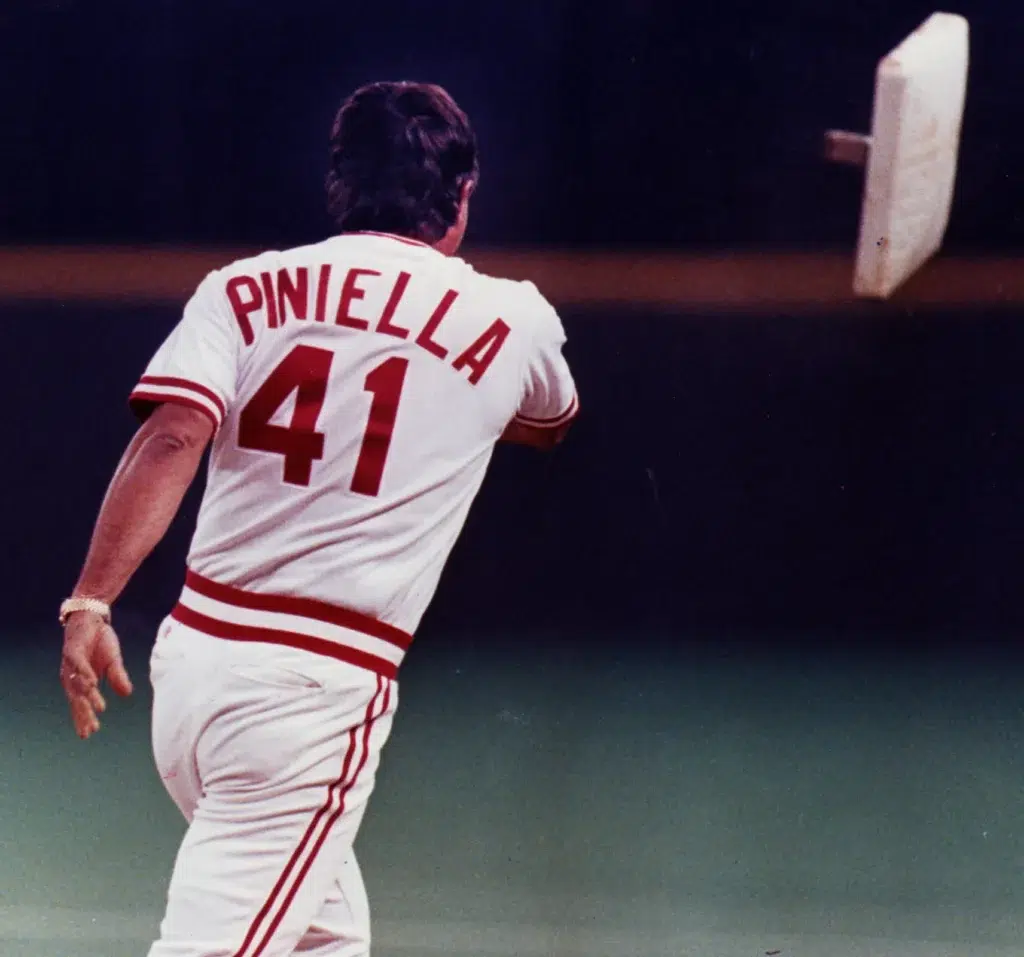
Lou Piniella gave baseball some of its best managerial meltdowns.
Piniella was famous for arguing, kicking dirt, yelling at umpires, and occasionally treating bases like movable props in a personal drama. His blowups could be ridiculous, but they also carried the emotional exhaustion of a manager living through a long baseball season.
That’s why fans loved them.
Baseball’s daily grind turns frustration into a renewable resource. A bad call in April can annoy a manager. A bad call in August after 120 games can make him look like he’s trying to dig a tunnel through the infield with his shoes.
Among sports meltdowns, Piniella’s stand out because they became almost ceremonial. Fans expected fire. Umpires expected volume. Players knew their manager would take the heat if necessary.
Like many old-school baseball meltdowns, they seem funnier now than they probably felt in the moment.
Still, if a base got thrown, fans knew the game had provided value.
Antonio Brown Leaves the Field
Antonio Brown’s exit during a 2022 game between the Tampa Bay Buccaneers and New York Jets became one of the strangest modern sports meltdowns.
Brown removed parts of his uniform, left the sideline during the game, waved to the crowd, and exited through the tunnel while the game was still happening. It was surreal, uncomfortable, and instantly viral.
The moment was difficult to process because Brown’s career had already included brilliance, conflict, controversy, and concern. He had been one of the NFL’s best receivers, but his later years became increasingly chaotic.
Among sports meltdowns, this one stands out because it didn’t look like a normal anger explosion. It looked like someone disconnecting from the structure of the game entirely. A player didn’t just argue or get ejected. He removed himself from the team in full public view.
Fans joked about it because the image was absurd.
But underneath the absurdity was something sadder.
Sometimes a meltdown looks funny because nobody knows what else to do with it.
Carlos Zambrano Loses It
Carlos Zambrano was one of baseball’s great emotional volcanoes.
The Chicago Cubs pitcher had elite talent and enormous passion, but his temper often became part of the story. He argued with umpires, fought with teammates, smashed things, and seemed capable of turning frustration into a weather event at any moment.
Zambrano’s meltdowns were memorable because they reflected both competitiveness and instability. Pitching already requires emotional control. A starter lives inside failure: bad calls, bloop hits, errors behind him, missed spots, rising pitch counts. Zambrano often looked like he was feeling all of it at once.
Among sports meltdowns, his stand out because they became part of his scouting report. Opponents, fans, and media understood that if the game tilted the wrong way, Zambrano might become his own subplot.
That’s dangerous for a pitcher.
The mound is lonely enough without bringing a match and gasoline.
Roberto Alomar Spits at an Umpire
Roberto Alomar spitting at umpire John Hirschbeck in 1996 remains one of baseball’s ugliest sports meltdowns.
Alomar was a great player, one of the best second basemen ever, but the incident became a major stain on his career. During an argument after being called out on strikes, Alomar spat in Hirschbeck’s face. He later made personal comments about the umpire, which worsened the situation.
The two men eventually reconciled publicly, and Alomar apologized. But the moment remains infamous because it crossed a clear line.
Among sports meltdowns, this one matters because it shows the difference between anger and degradation. Yelling at an umpire is part of baseball culture, sometimes too much so. Spitting at someone is different. It strips away the usual “heat of competition” excuse.
The best athletes can still do indefensible things.
That’s why memory is complicated.
A great career doesn’t erase the image.
The 2004 Yankees Collapse
Not every sports meltdown belongs to one person.
The 2004 New York Yankees gave baseball one of the greatest team meltdowns ever by blowing a 3-0 ALCS lead to the Boston Red Sox.
The Yankees had history, confidence, a powerful roster, and their most hated rival nearly buried. Then Boston came back. Dave Roberts stole second. David Ortiz delivered huge hits. Curt Schilling’s bloody sock became mythology. The pressure flipped completely.
By Game 7, the Yankees didn’t just look beaten.
They looked haunted.
Among sports meltdowns, this one is massive because it involved a whole franchise’s aura cracking. The Yankees had tortured Boston for decades. The Red Sox had been the cursed ones. Then New York became the first MLB team to blow a 3-0 postseason series lead.
That kind of reversal doesn’t fade.
For Boston, it was resurrection.
For New York, it was a collapse with witnesses in every generation.
The Atlanta Falcons’ 28-3 Collapse
The Falcons’ Super Bowl LI collapse is one of the most famous team sports meltdowns ever.
Atlanta led the New England Patriots 28-3 in the third quarter. The game looked over. The Falcons had speed, rhythm, and a defense making Tom Brady uncomfortable. Then the Patriots started coming back, and Atlanta seemed to lose its grip on clock, field position, and composure.
New England won in overtime.
The meltdown became instantly historic because the number was so clean.
28-3.
That’s all fans need to say.
Among sports meltdowns, this one stands out because it unfolded slowly enough for everyone to see it coming and still not fully believe it. Every Patriots score made the air heavier. Every Falcons mistake made the impossible less impossible. By the end, Atlanta looked trapped inside a nightmare the rest of the world was watching in real time.
One team made history.
The other became a number.
Jean Van de Velde at The Open
Jean Van de Velde’s collapse at the 1999 Open Championship is one of golf’s most painful meltdowns.
Standing on the 18th tee at Carnoustie with a three-shot lead, Van de Velde needed only to avoid disaster. Instead, disaster arrived in pieces. Bad decisions, bad shots, rough, water, sand, and visible confusion turned the hole into a slow-motion collapse.
He eventually lost in a playoff.
Golf meltdowns are uniquely brutal because the athlete has so much time to think. There’s no fast break or pass rush forcing instant reaction. The player walks, waits, calculates, recalculates, and feels the pressure growing heavier with each bad outcome.
Among sports meltdowns, Van de Velde’s stands out because the championship was right there. He didn’t need brilliance. He needed caution and execution.
Instead, the 18th hole became a haunted house.
Some meltdowns explode.
This one drowned slowly.
Greg Norman at the Masters
Greg Norman’s collapse at the 1996 Masters remains one of golf’s defining sports meltdowns.
Norman entered the final round with a six-shot lead over Nick Faldo. He was one of the best players in the world, and the Masters title seemed ready to complete a major piece of his legacy.
Then the lead disappeared.
Norman shot a final-round 78, while Faldo played brilliantly and won by five. The images of Norman struggling, pressing, and unraveling became painful to watch because he was so visibly carrying the weight of the moment.
Among sports meltdowns, this one endures because Norman was too great for the collapse to be dismissed as a fluke by an unprepared player. He had the talent. He had the lead. He had the stage.
That’s what made it hurt.
Golf doesn’t let players hide from themselves.
At Augusta, Norman had nowhere to hide.
Why Meltdowns Become Part of Legacy
Sports meltdowns become part of legacy because fans remember emotional failure as vividly as athletic failure.
A missed shot may be forgotten. A smashed racket may not. A lost game may fade. A headbutt in a World Cup Final will not. A bad round can become a statistic. A collapse on the 18th hole becomes a ghost story.
That can be unfair, but it’s also part of what makes sports human. Fans don’t only watch for excellence. They watch for strain. They want to see who can hold the moment and who can’t.
The danger is turning every meltdown into entertainment without asking what it shows. Some reveal passion. Some reveal poor sportsmanship. Some reveal emotional exhaustion. Some reveal deeper problems. Some reveal systems that pushed people too far.
A meltdown is never just noise.
It’s information.
Not always flattering information.
But information.
The Legacy of Sports Meltdowns
The legacy of sports meltdowns is that they show pressure’s breaking point.
John McEnroe turned outrage into a catchphrase. Bobby Knight turned a chair into a symbol of coaching fury. Mike Tyson’s bite shocked boxing. Serena Williams’ U.S. Open clash sparked debate beyond tennis. Zidane’s headbutt changed the final image of his career. Dennis Rodman’s kick showed chaos crossing a line. George Brett’s Pine Tar sprint made baseball rage hilarious. Earl Weaver and Lou Piniella made umpire arguments into theater. Antonio Brown’s sideline exit became a modern viral unraveling. Roberto Alomar’s spitting incident became an ugly stain. The Yankees’ 2004 collapse reversed baseball mythology. The Falcons’ 28-3 collapse became a number nobody forgets. Jean Van de Velde and Greg Norman showed golf’s special cruelty.
Sports meltdowns matter because they remind fans that greatness doesn’t remove emotion.
It intensifies it.
The bigger the stage, the harder the mask has to work.
Sometimes the mask loses.