

Underrated athletes are the ones history almost gets wrong.
They win. They produce. They show up. They make teammates better. They last longer than expected, carry more weight than people notice, and quietly build careers that look better every time fans actually stop and study them.
But somehow, they don’t always get the mythology.
Maybe they played in the wrong market. Maybe they weren’t loud enough. Maybe their game wasn’t flashy. Maybe they shared the stage with a bigger star. Maybe they made greatness look too easy, too quiet, too practical. Maybe they were so consistent that fans started treating excellence like background noise.
That’s what makes underrated athletes so fascinating. They remind us that fame and greatness aren’t the same thing. Some players become famous because they’re spectacular. Others become great because they’re reliable, intelligent, efficient, and impossible to replace.
Sports fans love stars who explode.
But some of the best athletes in history were more like engines.
They powered everything.
They just didn’t always get the parade.
Why Underrated Athletes Matter
Underrated athletes matter because they expose how lazy sports memory can be.
Fans remember highlights. They remember championships. They remember loud personalities, viral moments, signature shoes, big markets, famous nicknames, and dramatic storylines. But not every great career comes wrapped in a perfect narrative.
Some athletes are hard to market because their greatness is subtle. A defender who erases half the field. A point guard who controls pace. A baseball player who does everything well for 15 years. A receiver who produces through bad quarterback play. A big man whose bank shot and footwork aren’t flashy enough for casual fans.
That kind of greatness needs attention.
If fans only remember the loudest stars, they miss the people who made winning possible. They miss the second options, the defensive anchors, the quiet leaders, the all-around players, and the steady professionals whose careers age better than their fame.
That’s why this conversation matters.
Being underrated doesn’t mean nobody knows you.
It means the respect still doesn’t match the resume.
Tim Duncan
Tim Duncan might be the greatest boring superstar in sports history.
That sounds like an insult, but it isn’t. It’s the whole point. Duncan was so steady, so fundamental, so calm, and so uninterested in selling himself that casual fans sometimes treated him like less than he was.
That’s absurd.
Duncan won five NBA championships, two MVP awards, three Finals MVP awards, and anchored one of the most successful franchises in modern sports. He was an elite defender, brilliant passer, dominant low-post scorer, perfect teammate, and the central figure of the San Antonio Spurs’ dynasty.
But because he didn’t chase attention, he sometimes gets discussed like a quiet footnote instead of one of the greatest basketball players ever.
Duncan’s game didn’t scream. It solved problems. The bank shot. The positioning. The rotations. The calm in playoff chaos. The ability to fit with different teammates, different eras, and different versions of the Spurs made him more valuable than his highlight reels could ever capture.
Among underrated athletes, Duncan is the perfect example of greatness hidden in plain sight.
He wasn’t boring.
He was inevitable.
Scottie Pippen
Scottie Pippen is famous, but he’s still underrated.
That seems contradictory until you look at how people talk about him. Too often, Pippen gets reduced to Michael Jordan’s sidekick. That label is technically connected to history, but it undersells how complete and terrifying he was.
Pippen was one of the best defenders basketball has ever seen. He could guard multiple positions, initiate offense, rebound, pass, run the floor, and change the entire shape of a game without needing to score 35 points. His versatility helped make the Chicago Bulls’ dynasty work.
Jordan was the engine of the Bulls’ mythology.
But Pippen was the system’s skeleton.
Without him, the Bulls don’t become the same team. They don’t press the same way. They don’t switch the same way. They don’t survive the same way when Jordan sits. They don’t become the global machine fans remember.
Pippen is one of the great underrated athletes because playing beside an icon made him both famous and underappreciated. Everyone knows his name. Not everyone gives his game the full weight it deserves.
That’s a strange kind of disrespect.
Larry Fitzgerald
Larry Fitzgerald had one of the most graceful careers in NFL history.
He wasn’t always surrounded by elite quarterback play. He didn’t spend his whole career inside a glamour franchise. He didn’t talk like a diva or turn every contract into a public drama. He just kept catching everything.
Fitzgerald’s hands were legendary. His route running was precise. His professionalism became part of his identity. He could dominate as a deep threat early, then age into a brilliant possession receiver and leader. That adaptability made his career special.
His 2008 playoff run was one of the greatest postseason stretches by a receiver ever. For a moment, he looked like he might drag the Arizona Cardinals to a Super Bowl title by sheer force of will.
Because he played in Arizona and carried himself with unusual quietness, Fitzgerald sometimes gets left out of casual greatest-receiver arguments faster than he should. Jerry Rice is the standard. Randy Moss changed the ceiling. Terrell Owens had drama and numbers. Calvin Johnson had physical mythology.
Fitzgerald had excellence without chaos.
That shouldn’t make him easier to overlook.
It should make him harder to ignore.
Adrian Beltre
Adrian Beltre’s career aged like a secret becoming obvious.
For years, he was respected but not always treated like one of the best third basemen in baseball history. Then the numbers kept piling up. The defense stayed elite. The bat stayed dangerous. The longevity became impossible to ignore.
Beltre finished with over 3,000 hits, huge power, brilliant defense, and a personality fans eventually came to love. He played the game with skill and edge, but also with a joy that made him memorable: the no-touching-his-head reactions, the one-knee home runs, the playful irritation with teammates.
What makes Beltre one of the great underrated athletes is that his career didn’t always feel like a marketing event. He wasn’t constantly framed as the face of baseball. He didn’t live in the same cultural space as the loudest stars. But when fans look back, the resume is massive.
Third base is a demanding position, and Beltre played it beautifully for years while hitting enough to belong in any serious conversation about all-time greats at the position.
Some athletes need time for people to understand them.
Beltre’s career kept making the argument until nobody could reasonably deny it.
Hakeem Olajuwon
Hakeem Olajuwon is respected, but he still sometimes gets squeezed in all-time conversations.
That’s what happens when your prime overlaps with Michael Jordan’s era and the NBA’s biggest media mythologies. Hakeem didn’t have the same marketing machine as Jordan. He didn’t play in Los Angeles, Boston, or New York. He didn’t build his legacy through noise.
He built it through footwork, defense, timing, and one of the most complete center games ever.
Olajuwon won two championships, two Finals MVPs, an MVP, Defensive Player of the Year awards, and remains one of the greatest shot blockers in NBA history. His “Dream Shake” became basketball art. His defense could erase mistakes everywhere. His offense was too skilled for slow big men and too powerful for smaller ones.
The 1994 and 1995 playoff runs should be discussed with more reverence. Hakeem didn’t just win. He went through elite competition and made other great centers look ordinary.
Among underrated athletes, Hakeem is the kind of player whose greatness grows the more carefully people watch.
The highlights are beautiful.
The full game is even better.
Tina Thompson
Tina Thompson deserves a much louder place in basketball history.
As the first draft pick in WNBA history and a cornerstone of the Houston Comets dynasty, Thompson helped build the foundation of a league. She wasn’t just present at the beginning. She was great at the beginning.
The Comets won the first four WNBA championships, and Thompson’s scoring, size, skill, and versatility made her essential. Cynthia Cooper often got the brightest spotlight, and deservedly so, but Thompson was a force in her own right.
What makes her one of the most underrated athletes is that early WNBA greatness still doesn’t always receive the historical oxygen it deserves. Fans talk about league growth, modern stars, and current visibility, but the players who carried the league’s first years deserve deeper recognition.
Thompson was smooth, tough, productive, and foundational.
That word matters.
Some athletes join a league.
Others help prove the league belongs.
Thompson did the second.
Marvin Harrison
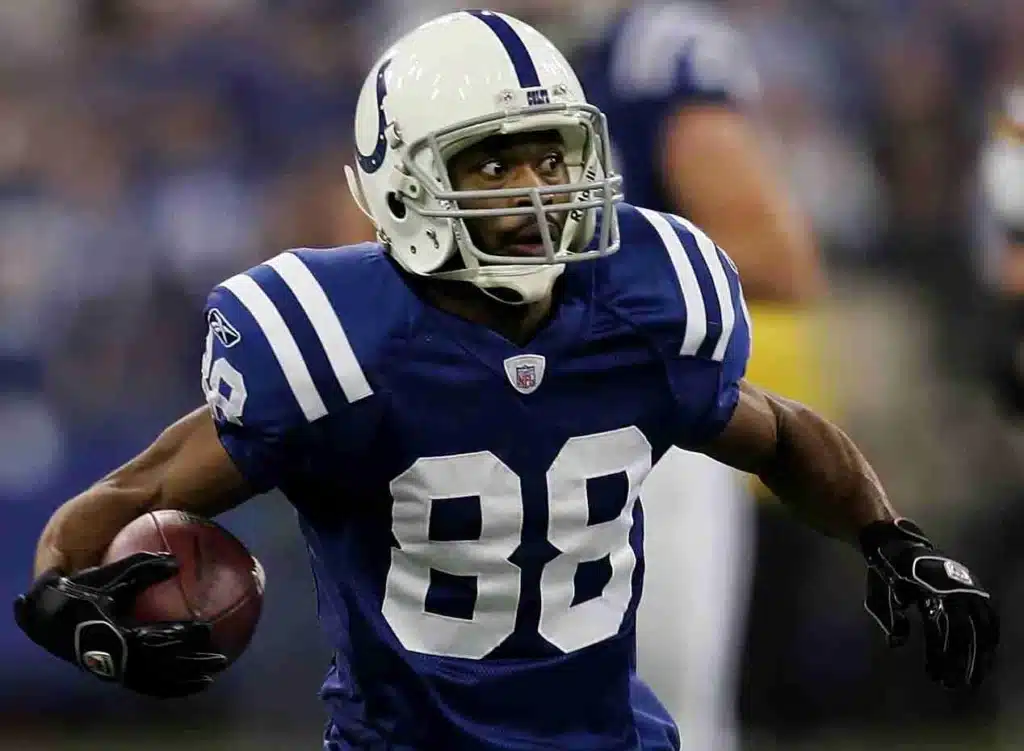
Marvin Harrison was so precise he almost made greatness look routine.
That may have hurt his fame.
Harrison didn’t have the loud personality of Terrell Owens, the physical mythology of Randy Moss, or the long public farewell of Larry Fitzgerald. He just destroyed defenses with route running, timing, hands, and one of the best quarterback-receiver connections ever with Peyton Manning.
His numbers were enormous. His consistency was ridiculous. His ability to separate without wasted motion made him one of the most technically brilliant receivers in NFL history.
But because his game was quiet and his public persona even quieter, Harrison sometimes gets treated as less exciting than other all-time great receivers.
That’s the mistake.
A receiver doesn’t need drama to be devastating. Harrison’s greatness was surgical. He didn’t always look like he was overpowering defenders. He looked like he knew where they’d be before they did.
Among underrated athletes, Harrison proves that smoothness can hide dominance.
He wasn’t less great because he made it look clean.
Becky Hammon
Becky Hammon’s basketball legacy deserves more attention because it stretches across playing, leadership, and coaching influence.
As a player, she was an undersized guard who built herself into a star through skill, toughness, shooting, and intelligence. She became one of the WNBA’s most respected players despite not entering the league with the same hype as some bigger names.
Then her post-playing career added another layer. Hammon became a groundbreaking coach, working in the NBA with the San Antonio Spurs before becoming a championship-winning WNBA head coach.
That full arc matters.
Hammon is one of the great underrated athletes because her impact isn’t contained in one box. She was a high-level player, a basketball mind, and a figure who helped expand what people imagined women could do in elite coaching spaces.
Sports history often separates playing greatness from coaching influence.
Hammon’s story asks why.
Some careers matter because of stats.
Some matter because they open doors after the stats end.
Dwight Freeney
Dwight Freeney terrorized offensive tackles with one move everyone knew was coming and still couldn’t stop.
The spin move became his signature, but reducing him to that misses the larger point. Freeney was one of the most dangerous edge rushers of his era. His speed, bend, leverage, and explosion changed how offenses had to protect Peyton Manning’s leads in Indianapolis.
Because the Colts were so identified with Manning and the offense, Freeney’s importance can get slightly buried. But those Indianapolis teams needed defensive playmakers who could turn opponents one-dimensional. Freeney did that.
He wasn’t the biggest defensive end. He wasn’t built like the old prototype. But his pass-rushing ability was devastating, and his influence can be seen in the way modern edge rushers use speed and flexibility to attack tackles.
Freeney belongs among underrated athletes because his greatness lived in pressure, disruption, and fear — things that don’t always show up cleanly in basic box scores.
Quarterbacks felt him.
That’s the stat that mattered.
Pau Gasol
Pau Gasol was the player who turned Kobe Bryant’s post-Shaq Lakers from frustrated contenders back into champions.
That alone should make him more celebrated.
Gasol brought skill, size, passing, touch, rebounding, and calm to Los Angeles. He wasn’t loud. He wasn’t built around intimidation. But he was exactly what those Lakers needed: a brilliant big man who could score, facilitate, and fit beside Kobe without needing to dominate the spotlight.
The Lakers went to three straight Finals after Gasol arrived and won two championships.
Still, some fans underrate him because his game was elegant instead of brutal. He didn’t always match the American stereotype of what a dominant big man should look like. But elegance isn’t weakness. Gasol’s footwork, IQ, and versatility made him one of the best international players in NBA history.
Among underrated athletes, Gasol is a reminder that the right second star can change everything.
Kobe needed help.
Gasol was more than help.
He was the missing piece.
Why Great Athletes Get Underrated
Great athletes get underrated for all kinds of reasons.
Market size matters. Personality matters. Style matters. Teammates matter. Timing matters. A player who spends a career in a smaller city may not get the same national attention. A quiet star may get overshadowed by louder ones. A defender may be less celebrated than a scorer. A player who does everything well may get less praise than someone with one spectacular skill.
Winning also distorts memory.
A great player without a ring gets dismissed too easily. A great player with a ring as a second option gets reduced too quickly. A great player on a boring team gets forgotten. A great player in a sport’s less-covered league has to fight harder for attention.
That’s why underrated athletes are everywhere.
Sports memory isn’t fair.
It’s loud.
The Legacy of Underrated Athletes
The legacy of underrated athletes is that they force fans to look closer.
Tim Duncan proved quiet dominance can build a dynasty. Scottie Pippen showed that the second star can be historically complete. Larry Fitzgerald made professionalism and consistency look beautiful. Adrian Beltre built an all-time baseball resume without always getting superstar treatment. Hakeem Olajuwon deserves every ounce of respect given to the greatest big men ever. Tina Thompson helped build the WNBA’s foundation. Marvin Harrison turned route running into art. Becky Hammon’s career stretched from star guard to coaching pioneer. Dwight Freeney made pass rushing feel like a magic trick. Pau Gasol helped restore the Lakers to championship glory.
These athletes weren’t invisible.
They were underpraised.
That difference matters.
The loudest sports stories aren’t always the truest ones. Sometimes greatness lives in the details: the rotation, the route, the help defense, the extra pass, the daily production, the leadership nobody turns into a commercial.
Underrated doesn’t mean unknown.
It means the full respect came late.
And for some athletes, it’s still catching up.